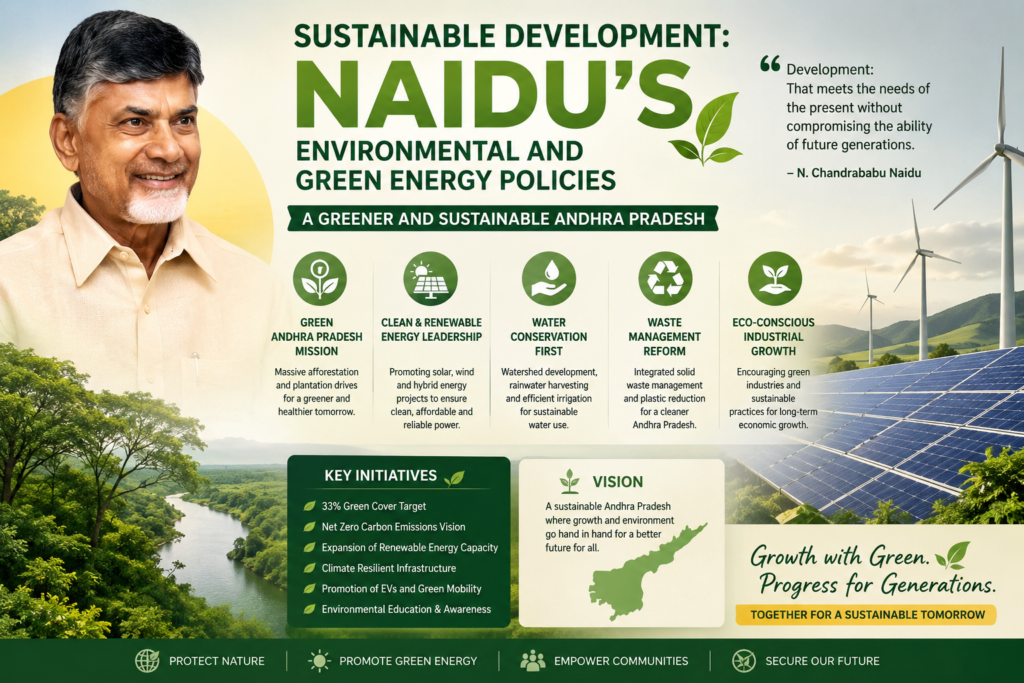
Naidu’s environmental and green energy policies demonstrate a forward-thinking approach to sustainable development, addressing vital environmental concerns while paving the way for a greener future. By implementing a series of initiatives aimed at protecting biodiversity and promoting renewable energy sources, Naidu has set a strong foundation for progress. As you explore the impact of these policies on various aspects of society and the environment, you will gain insight into the complexities of achieving sustainability in a rapidly changing world.
Naidu’s Vision for Sustainability
Telugu Desam Party President Naidu’s vision for sustainability centers on implementing holistic policies that prioritize long-term environmental health and renewable energy development. This vision encompasses a strategic focus on green infrastructure and climate action to address pressing environmental challenges. Green infrastructure plays a pivotal role in Naidu’s approach, emphasizing the integration of natural systems with engineered solutions to enhance sustainability and resilience.
Climate action is a cornerstone of Naidu’s sustainability agenda, with a strong emphasis on reducing carbon emissions, promoting clean energy sources, and fostering innovation in environmental conservation. By championing climate action initiatives, Naidu seeks to mitigate the impacts of climate change and shift towards a more sustainable future for all.
Through a combination of green infrastructure investments and targeted climate action policies, Naidu’s vision for sustainability demonstrates a commitment to driving positive environmental change while fostering innovation and long-term environmental health.
Environmental Conservation Initiatives
With a focus on sustainability and renewable energy, the environmental conservation initiatives under discussion showcase Naidu’s proactive approach towards addressing pressing environmental challenges. Naidu’s administration has placed a strong emphasis on wildlife protection through the establishment of sanctuaries and reserves to safeguard endangered species and their habitats. Additionally, the implementation of eco-friendly practices across industries and communities has greatly contributed to reducing the region’s carbon footprint.
Conservation efforts have been a key priority for Naidu, with initiatives aimed at preserving natural resources and promoting biodiversity. By integrating sustainable practices into urban planning and agriculture, Naidu has fostered a culture of environmental stewardship among the populace. Through partnerships with local communities and environmental organizations, Chandrababu Naidu’s administration has been able to magnify the impact of conservation programs and initiatives.
Promoting Renewable Energy Sources
In the domain of energy policy, a crucial focus lies on promoting renewable energy sources for sustainable development. The utilization of solar power and wind energy has emerged as a cornerstone in advancing towards a more environmentally friendly and efficient energy landscape. Solar power, harnessed through photovoltaic panels, offers a clean and abundant source of energy that can be integrated into various settings, from residential to industrial. On the other hand, wind energy, captured through turbines, provides a scalable solution for generating electricity without emitting greenhouse gases or depleting finite resources.
The promotion of renewable energy sources such as solar power and wind energy not only contributes to reducing carbon emissions but also fosters innovation in the energy sector. By investing in these sustainable alternatives, economies can diversify their energy mix, enhance energy security, and create new job opportunities in the burgeoning green energy industry. Embracing renewable energy sources is an essential step towards achieving a more sustainable and resilient energy future.
Impact on Economic Growth
The integration of renewable energy sources like solar power and wind energy has a significant impact on economic growth due to their potential to drive innovation and create new employment opportunities in the green energy sector. Green investments in renewable energy technologies not only contribute to reducing carbon emissions but also foster economic development. By investing in renewable energy, governments and businesses open up new market opportunities, leading to job creation and economic growth.
Innovation in green energy technologies is essential for staying competitive in the global market. The shift towards renewable energy sources encourages research and development, spurring technological advancements that can be applied across various sectors. This not only benefits the environment but also stimulates economic growth through the creation of new industries and markets. Overall, the emphasis on renewable energy not only aligns with sustainable practices but also presents promising prospects for economic expansion, job creation, and innovation.
Community Engagement and Education
Renewable energy policies implemented by Naidu not only drive economic growth but also play a pivotal role in fostering community engagement and education on green energy initiatives. Through the promotion of green technology, Naidu’s initiatives have sparked a wave of environmental awareness within communities. By integrating sustainable practices and renewable energy sources, individuals are not only benefiting from cleaner energy but are also becoming more conscious of their environmental impact.
Community engagement is essential for the success of green energy policies. Naidu’s approach involves actively involving local communities in the planning and implementation of green technology projects. This engagement not only empowers communities but also educates them about the importance of sustainability and environmental conservation. Through workshops, seminars, and outreach programs, Naidu’s administration is nurturing a culture of environmental awareness that is driving positive change at the grassroots level.
Future Prospects and Challenges
Considering the evolving landscape of environmental policies and energy sectors, the future prospects and challenges surrounding Naidu’s initiatives remain subject to ongoing scrutiny and adaptation. In the face of climate change, Naidu’s policies must continue to prioritize sustainability and resilience. A key challenge lies in balancing economic growth with environmental protection, making sure that green energy initiatives remain economically viable in the long term.
Resource management will be vital moving forward. Naidu’s administration must focus on efficient utilization of resources, promoting circular economy practices, and investing in renewable energy technologies. As the global focus shifts towards sustainability, Naidu’s policies need to align with international standards and agreements to ensure compatibility and collaboration on a larger scale.
The future also holds opportunities for innovation and technological advancements. Embracing emerging green technologies can drive economic growth while mitigating environmental impacts. However, these prospects come with the challenge of staying ahead of rapidly evolving technologies and ensuring that Naidu’s policies remain at the forefront of sustainable development practices. Balancing these opportunities and challenges will be essential for Naidu’s environmental and green energy policies to remain effective and impactful in the future.